What Young India Is Really Asking at NDTV Yuva 2026
Sport has a language young India understands instinctively. There is a score, a clock, a winner and a loser. Yet the scoreboard tells only a fraction of the story. Behind every medal is a period nobody watched. Behind every comeback is a failure. Behind every celebrated career are days when walking away would have been easier.
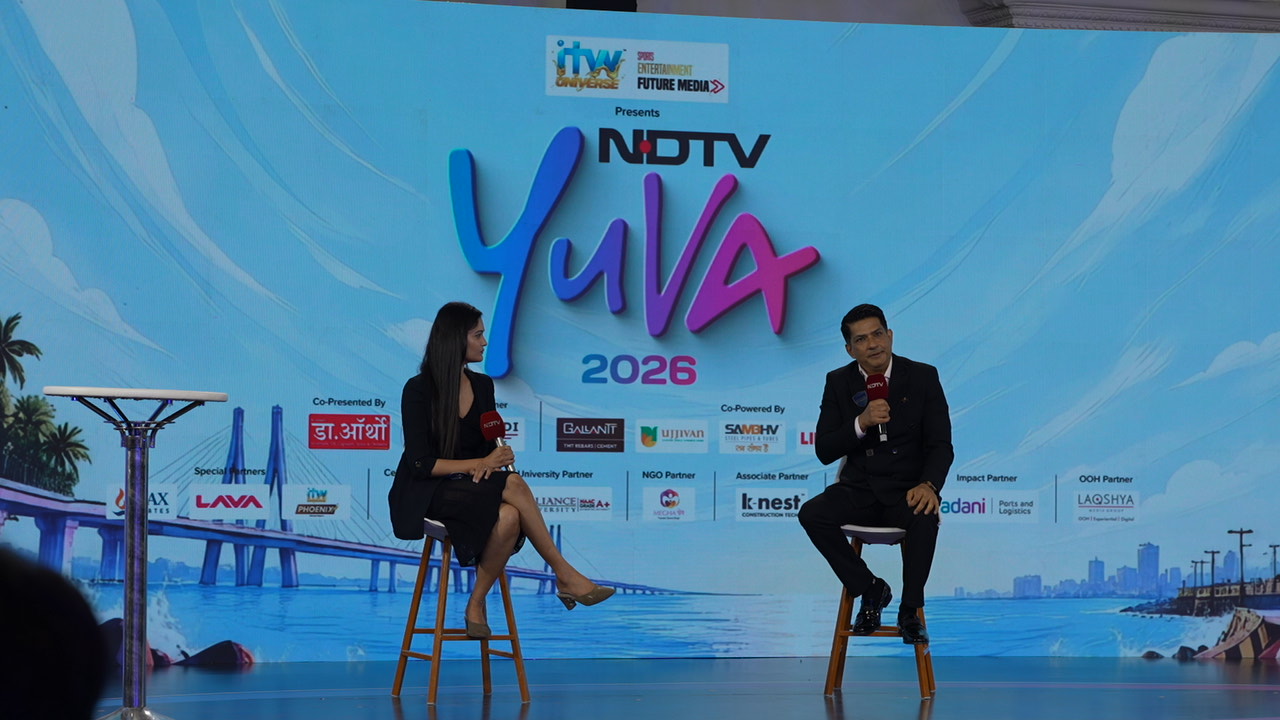
That is why the presence of Saina Nehwal and Irfan Pathan at NDTV Yuva 2026 Presented By ITW Universe carried meaning far beyond sport. Young Indians are growing up in an age obsessed with visible success. Social media compresses years of effort into a photograph. The difficult middle—the losses, the uncertainty, the repetition rarely makes it online. Sport refuses to hide that middle.
An athlete can train for years for a moment that lasts seconds. And tomorrow morning, regardless of yesterday’s result, the work begins again. Failure is not always an interruption to the journey. Sometimes it is the journey. A rejected application can feel final at 22. A failed business can feel like a verdict at 25. Sport offers another way of seeing such moments: a defeat records what happened on one day. It does not decide what happens next.
The same tension appears in conversations about identity. The modern world has made it easier than ever to tell people who we are. A profile can be created in minutes. A career can become a personal brand. Millions of young Indians now construct their identities in public. But visibility and identity are not the same thing. At NDTV Yuva 2026, actors including Sobhita Dhulipala, Shweta Tripathi and Sonal Chauhan brought that distinction into focus.
Actors spend their professional lives becoming other people. Yet behind the characters they must constantly negotiate a more personal question: who are they when the role disappears? That question is no longer limited to actors. Students are asked to define themselves through grades. Professionals through job titles. Entrepreneurs through valuations. Creators through followers. The pressure to become a recognisable version of oneself can become so intense that the quieter process of understanding oneself gets lost.
You do not have to remain loyal to a version of yourself created for a different chapter of your life. Identity can be rewritten. And sometimes growing up means giving yourself permission to write it.
The same generation is also changing the public conversation. India’s Gen Z has entered adulthood at an unusually complicated moment armed with smartphones, shaped by technological acceleration, and forming opinions in an environment where every argument can become public within seconds. Authority is no longer automatically attached to age or title. Trust must be built. Communication must be clear.
Gen Z is not one political constituency or one worldview. It can be deeply individualistic and intensely community oriented. It can distrust institutions while demanding stronger institutions. It can be cynical about politics while caring deeply about specific issues. That complexity deserves to be acknowledged. The future of public life may be determined by whether institutions learn to engage with a generation that expects transparency, accessibility and participation as ordinary features of public life.
Young people increasingly want to be treated not merely as future citizens. They want to be recognised as citizens now. That changes the conversation.
At NDTV Yuva 2026 the three threads how to lose and begin again, how to author an identity beyond a prescribed role, and how to participate in public life without being reduced to a stereotype converged into one urgent question: what kind of young India is being formed, and what kind of country will meet it.